
How to Budget a Kitchen Remodel in 2025: Costs by Project Scope
See real 2025 kitchen remodel cost ranges by project scope, plus a mid-range budget split, ROI figures, and hidden costs from NAHB, NKBA, and Cost vs. Value.

How much should you set aside for a kitchen remodel cost in 2025? Most homeowners planning a serious overhaul underestimate the total by twenty to thirty percent, then scramble when the drywall comes off. This guide walks through real ranges from NAHB, Cost vs. Value, and NKBA, then shows how to map those numbers to your project scope, from a paint-and-hardware refresh to a full gut renovation.
What drives kitchen remodel cost per square foot in 2025?
The typical kitchen remodel cost per square foot in 2025 lands between $150 and $500 depending on finish level and structural scope, according to figures published by Remodeling Magazine's Cost vs. Value report. A 200 square foot mid-range kitchen therefore averages $30,000 to $80,000 all-in, while high-end projects clear six figures without difficulty.
Three variables move that per-square-foot figure more than any other. Cabinet grade sets the ceiling, since custom cabinetry can consume 40% of a total budget by itself. Layout complexity is second: moving a sink, gas line, or load-bearing wall triggers plumbing, framing, and inspection costs that a cosmetic refresh avoids entirely. Regional labor rates finish the picture, with coastal metros running 30 to 50% above rural pricing per NAHB regional cost tracking. If you want a scope-appropriate quote, our kitchen build services page explains how we structure estimates around these three inputs.
How to allocate kitchen remodel cost across cabinets, countertops, and appliances
The most reliable split from NKBA industry data allocates a mid-range kitchen remodel cost as follows: 35% cabinets, 20% installation labor, 15% appliances, 10% countertops, 5% flooring, 5% lighting and electrical, 5% plumbing fixtures, 5% design fees plus contingency. Homeowners who ignore these ratios almost always overspend on one category and starve another.
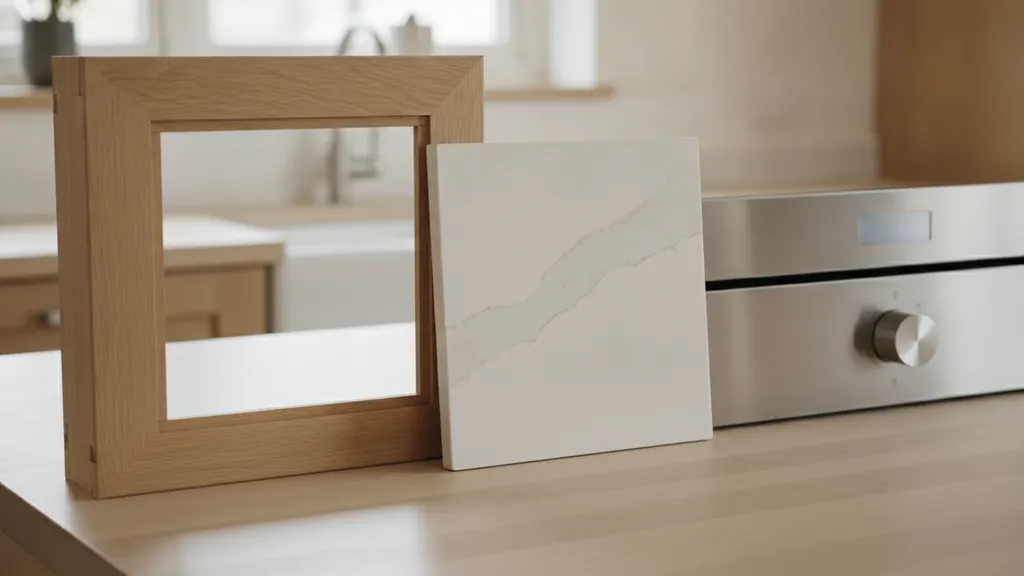
Cabinets dominate because they combine material, hardware, and skilled installation into one line item. Stock cabinets run $100-$300 per linear foot, semi-custom $150-$650, fully custom $500-$1,200. Countertops swing similarly: laminate at $30 per square foot, quartz at $75-$120, honed marble past $200. Appliances behave predictably. Budget the package first, then choose the range you actually want, then adjust the rest.
Cabinet grade refers to the construction quality and customization level of kitchen units, from stock (standard sizes, available off-shelf) to semi-custom (limited dimensional modifications) to fully custom (built to exact specifications with any wood species, finish, or configuration). Grade choice sets the ceiling on the single largest line item in the kitchen remodel budget and should be locked before any other product decision is made.
| Category | % of budget | Mid-range $ on $75k total |
|---|---|---|
| Cabinets | 35% | $26,250 |
| Installation labor | 20% | $15,000 |
| Appliances | 15% | $11,250 |
| Countertops | 10% | $7,500 |
| Flooring | 5% | $3,750 |
| Lighting and electrical | 5% | $3,750 |
| Plumbing fixtures | 5% | $3,750 |
| Design plus contingency | 5% | $3,750 |
Which upgrades protect kitchen remodel cost at resale?
Not every dollar spent on a kitchen remodel cost comes back at closing. The 2024 Cost vs. Value report from Remodeling Magazine pegs the resale recoup on a mid-range major kitchen remodel at 49.5%, meaning a $75,000 project adds roughly $37,000 to the appraised sale price. Minor mid-range remodels do better, around 96% recoup, because the spend stays low relative to the perceived upgrade.
The high-ROI upgrades cluster in three areas. First, cabinet refacing and hardware refreshes, both under $10,000 and visually dominant. Second, quartz counters, which appraisers now treat as a baseline expectation in most metro markets according to Architectural Digest's renovation cost breakdown. Third, induction cooktops and quiet dishwashers, both of which appear on NKBA's most-requested feature list and translate directly to buyer interest. You can read more about James & Co's approach to resale-aware remodels and browse our completed project gallery for a longer treatment of which finishes hold their value in the Northeast market.
Hidden expenses that inflate the final kitchen remodel cost
Every experienced builder budgets a 10-15% contingency because hidden expenses hit almost every project. The kitchen remodel cost that appears on the initial contract rarely includes the extras that surface once demolition starts and the walls come open. Plan for them up front and the project ends on budget instead of on a credit card.
The five most common surprises that inflate the final bill: aging electrical panels that fail inspection under new appliance loads, typically costing $3,000-$5,000 to upgrade from 100-amp to 200-amp service; plumbing rerouting when a sink shifts more than 12 inches from its original position; subfloor rot beneath dishwashers and refrigerators that soaked the wood for years without visible signs; permit fees the general contractor did not break out as a separate line item; and dumpster or debris removal on tight urban sites where street permits and elevator use add $500-$1,500. Each of these cost drivers is discoverable before demo with a pre-construction inspection from a licensed electrician, a plumber, and your general contractor. Scheduling those three walkthroughs in the same week, before you sign the main contract, adds three to five days to the pre-construction phase but saves two to four times the inspection cost in avoided change orders. This Old House documents all five categories in field reports from working remodelers.
Cosmetic refresh vs. full gut renovation: choosing your scope
The scope decision drives the total kitchen remodel cost more than any single product choice. A cosmetic refresh (paint, hardware, appliance swap, maybe new counters) runs $15,000-$30,000 and finishes in three weeks. A pull-and-replace mid-range remodel keeps the layout, changes everything visible, and lands at $50,000-$90,000 over six to ten weeks. A full gut with new layout, structural changes, and premium finishes starts at $100,000 and can stretch to $200,000+ over four to six months per JLC's remodeling market data.
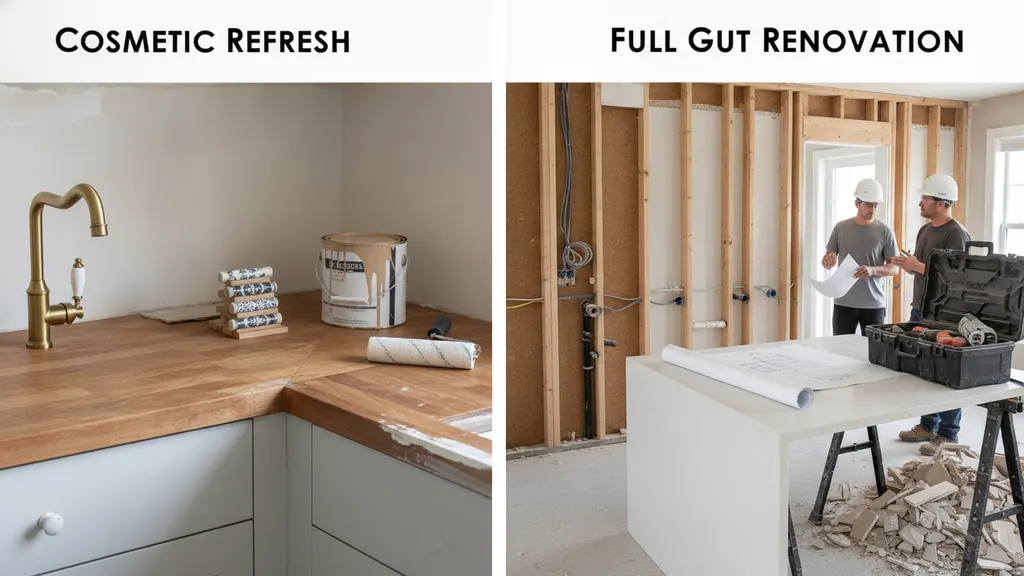
Pick the smallest scope that solves the underlying problem. If the layout works and the cabinets are structurally sound, a refresh delivers 80% of the visual impact at 20% of the cost. In twenty years of kitchen builds across the Northeast, I have seen more budget regret from under-scoping than from over-scoping: a homeowner who spent $28,000 on a cosmetic refresh, then hired us back two years later for a full gut because the layout never worked for how the family actually cooked. If you already replan meals around a dysfunctional layout, cramped counters, no landing zone next to the range, an isolated fridge, the refresh will feel wasted six months in. That is the moment a full kitchen remodel cost actually pencils out. Visit our homepage for recent project galleries at each of these scope tiers.
Frequently asked questions
What is the average kitchen remodel cost for a small kitchen in 2025?
For a small kitchen under 100 square feet, expect a mid-range remodel to run $18,000 to $35,000 in most US metros in 2025. This assumes semi-custom cabinets, quartz counters, a mid-tier appliance package, and no layout changes. Move a sink or gas line and the total climbs by $3,000-$7,000. High-end small kitchens with fully custom cabinetry and premium appliances routinely reach $60,000. Remodeling Magazine's Cost vs. Value report publishes regional breakdowns updated annually if you want the exact figure for your metro.
How much should I budget for contingency?
Budget 10-15% of the total kitchen remodel cost as a contingency fund held separately from the contract price. On a $75,000 project that is $7,500 to $11,250 set aside for surprises the demolition reveals: outdated wiring, rotted subfloor, plumbing that no longer meets code, or a supplier delay that forces a substitution at a higher price. NAHB member surveys show that projects without a contingency go over budget more than twice as often. NAHB economics research tracks the failure pattern in detail.
Do premium appliances actually raise resale value?
Not linearly. Once you cross the mid-range appliance threshold, buyers stop paying extra dollar for dollar. A $12,000 professional range in a $600,000 home is a liability, not an asset, because appraisers cannot match it to comparable sales. In homes above roughly $1.2 million, premium packages become a baseline expectation and do influence the sale price. Buyers respond to cabinet and countertop presentation far more than to appliance brand badges, so a well-matched mid-range package photographs better and sells faster than an oversized range in a modest kitchen. Architectural Digest's appliance guide summarizes the diminishing returns curve in detail.
Which finishes are trending in 2025 per NKBA data?
According to NKBA's 2024 Kitchen Trends survey, the fastest-rising requested features are induction cooktops, integrated pull-out organizers, mixed-metal hardware, warm-white cabinet paint, and full-height backsplashes in stone or slab quartz. Handleless cabinets and hidden pantry doors also climbed sharply. Buyers under 40 disproportionately request induction and integrated organizers, so those two items pay back best if you plan to sell within five years. White and off-white remain the dominant cabinet color choices for broad resale appeal. Avoid highly stylized finishes that will read as dated by 2028.
Is DIY worth it for any part of a kitchen remodel?
DIY works for demolition, painting, hardware installation, and sometimes backsplash tile. Each is low-risk and forgiving of first-time execution. It does not work for cabinets, countertops, electrical, plumbing, or gas. A misaligned cabinet run makes the whole kitchen look wrong, a mismeasured countertop template wastes $3,000 of stone, and unpermitted electrical work fails inspection at resale. Homeowners who DIY the right items save $3,000-$8,000 without risking the finished result. Houzz's DIY guidance lays out the specific tasks worth taking on.
How long does a full kitchen remodel take from contract to completion?
A mid-range pull-and-replace remodel takes six to ten weeks of on-site work once demolition begins, plus four to eight weeks of design, cabinet ordering, and permitting before that. A full gut with structural work stretches to twelve to twenty weeks on-site. Cabinet lead times drive the schedule more than any other input: stock ships in two weeks, semi-custom in six to eight, fully custom in ten to sixteen. Clients who order cabinets before the permit is approved typically shave two to four weeks off the total project timeline. Order cabinets first, then schedule demolition to align with delivery.
From our workshop
The work behind this
- Remodels & RenovationsTransforming lived-in homes with respect and artistry you can feel in every detail. We bring clarity to complexity, uncover what others may have covered up, and deliver spaces that feel completely renewed yet unmistakably solid.
- Custom Cabinets & KitchensHandcrafted in our Chattanooga workshop and installed by our own team, with options ranging from high-gloss finishes to solid oak, mahogany, and American walnut.


Thinking about a project of your own?
We start every job with a conversation. Tell us about your home and what you are imagining, and we will take it from there.
Book a Consultation