
Historic Homes in Chattanooga: What Owners Should Know
Own a piece of Missionary Ridge or Fort Wood? A working guide to designation, historic zoning review and restoration craft for historic homes in Chattanooga.

What does it take to keep a nineteenth-century ridge house standing for another century? Owners of historic homes in Chattanooga face a specific test: overlapping designation rules, hidden failures inside old wood and stone, and a small pool of craftsmen who can read century-old drawings. This guide walks through the districts, the paperwork, the choices, and the trades that keep historic homes in Chattanooga standing. It draws on the news of the Shavin House sale to sharpen a question every steward eventually asks.
What counts among historic homes in Chattanooga
Historic homes in Chattanooga cluster on the ridges above the city and inside four locally designated downtown districts. Missionary Ridge, Lookout Mountain, Signal Mountain and Riverview hold most significant private houses. Fort Wood, Battery Place, Ferger Place and St. Elmo carry district-level protection under city ordinance and were designated in the 1990s.
Missionary Ridge itself is a residential street of two and three story houses built from the 1890s onward, most sited along the crest for the view over the Tennessee River valley, per the National Register nomination for the Shavin House. Lookout Mountain adds late-Victorian summer houses and later mid-century commissions. Signal Mountain and Riverview hold estate-scale properties whose value has always come from siting, setback and view lines rather than from lot area or square footage.
Only one property in the city carries individual local landmark status: the Shavin House on Missionary Ridge, designated in 1995. It is the only Frank Lloyd Wright-designed house in Tennessee and was added to the National Register on March 23, 1993, per Chattanooga Times Free Press and Local 3 News reporting. Together these areas make up the working definition of historic homes in Chattanooga for most owners. For background on the property itself, see our post on the Shavin House and Wright's only Tennessee home.
There is a full breakdown of this topic in Historic home renovation tax credits: what Chattanooga owners claim.
National Register versus local landmark for historic homes in Chattanooga
For owners of historic homes in Chattanooga, the biggest source of confusion is the difference between National Register listing and local landmark designation. Most designated homes sit inside the four districts; exactly one, the Shavin House, is individually landmarked. One status is largely honorary. The other governs what you can do to the outside without a review.
| Question | National Register (federal) | Chattanooga local landmark |
|---|---|---|
| What it is | Honorary recognition of documented significance | A zoning overlay the city enforces |
| Exterior changes | No review for a private owner using private money | Historic zoning review before visible exterior work |
| Interior changes | Not covered | Generally not reviewed |
| Money | 20 percent federal rehabilitation credit, income-producing properties only | No credit attached to the designation itself |
| Shavin House | Listed March 23, 1993 | Designated 1995, the city's only individual landmark |
National Register listing is administered by the National Park Service. For a private owner using private money, listing does not restrict changes to a property, per National Park Service program guidance. Federal review only triggers when federal funds, permits, or licenses are involved. What listing does provide is documented significance, prestige on the market and, for income-producing properties, access to the federal historic rehabilitation tax credit, equal to 20 percent of qualified rehabilitation expenditures, administered under the Historic Preservation Tax Incentives program.
Local landmark designation is where the enforceable protection lives. In Chattanooga, that means design review by the city's historic zoning process before any exterior alteration visible from a public right of way. Interior changes are typically outside that scope. This is why a private owner of a designated house may not repaint the front, replace the windows, or reroof with a different material without a certificate on file.
How historic zoning review works before exterior changes
Before altering the exterior of designated historic homes in Chattanooga, an owner files for review through the city's historic zoning process. The review tests the proposed change against the district or landmark's character. The board either issues a certificate or asks for revisions. Ownership transfer does not reset the obligation.
The application typically covers material samples, elevations, and a description of the work. Roof material, siding, window pattern, porch details, paint scheme in some districts, and any addition affecting massing all fall within scope. Emergency repair for weather damage has an expedited path but the same certification requirement.
The August 2026 sale of the Shavin House quietly reminded every owner of a designated property in the city how this works. The buyers, a Middle Tennessee couple, take on a landmarked property with review obligations attached. Karen Shavin said she hopes the new owner treats it as a long-term home, per NewsChannel 9 reporting. The certificate process is the practical way the city holds a new owner to that expectation.
Stewardship lessons from 75 years on Missionary Ridge
Seventy-five years of one family in one house is rare in any market, and among historic homes in Chattanooga it is rarer still for a designated landmark. The Shavins held the house from construction to the 2026 sale; Gerte Shavin owned it until she died in 2020 at age 99.
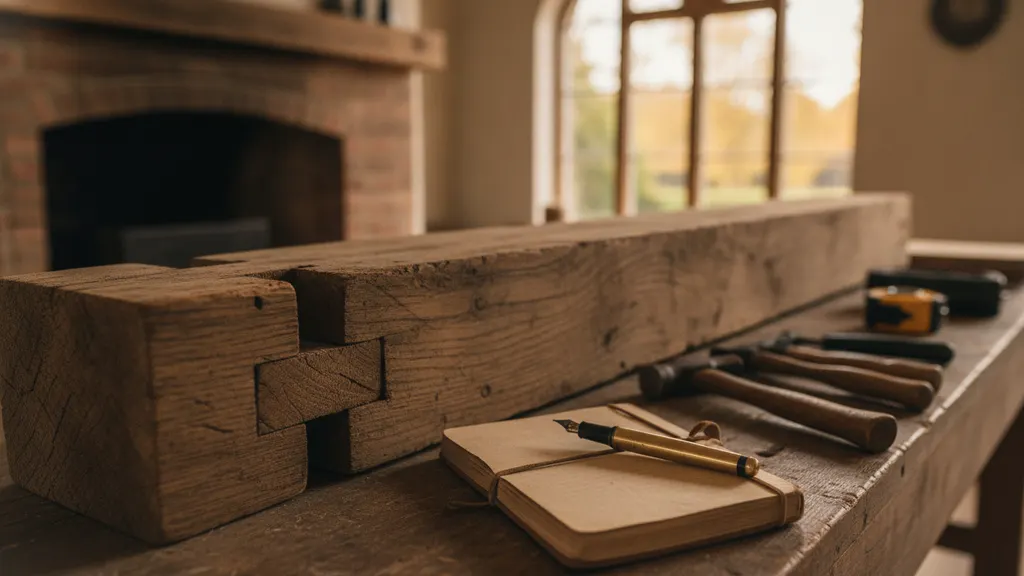
The stewardship lesson is not glamorous. It is continuity of maintenance. Owners of historic homes in Chattanooga who care about longevity write everything down, use the same trades for decades, catch a roof valley problem before it soaks a ceiling plane, and resist the urge to modernize what still works. For roofs alone, our overview of roof replacement in 2026 explains how material choices differ on a historic profile.
The Shavin House itself was built by local hands: stone mason Denton Skile of Daisy Mountain and carpenter John Hudson, working from Wright's plans under apprentice Marvin Bachman, per the National Register nomination. That local craft tradition is what restoration work in Chattanooga still depends on. If you own a significant house, your job across the years is to feed that tradition by hiring within it.
My own path ran through heritage training in Ireland and landmark restoration work in Sydney before Chattanooga in 2020, and it taught me one uncomfortable thing about this trade: the estimate that wins the job is usually the one that promises to erase the most evidence of age. The honest version of this work is slower, and I have learned to say so in the first meeting rather than the last.
Choosing a restoration contractor for historic homes in Chattanooga
For historic homes in Chattanooga, the wrong contractor turns preservation into demolition inside three months. The right one keeps the original where it can be repaired, sources compatible replacements where it cannot, and documents every change. The questions below separate a preservation shop from a standard remodel outfit.
Ask what share of past work was on buildings older than 75 years. Ask which NPS Preservation Briefs they reference for wood window repair, masonry cleaning and moisture control. Ask to see a project where they repaired rather than replaced original trim. Ask for the name of the millwork shop and the mason they call first. A contractor who has never spliced a rotted porch beam by scarf joint has never done preservation work.
| Question | Standard remodel answer | Preservation answer |
|---|---|---|
| Rotted window sash | Full replacement unit | Repair sash, re-glaze, add interior storm |
| Chipped stone coursing | Refit with dimensional block | Dutchman repair with matching stone |
| Damaged plaster wall | Demo and drywall | Patch with lime plaster, keep the substrate |
| Original trim profile | Off-the-shelf replacement | Custom knife, run to match on shop molder |
Picture a common Fort Wood case: an 1890s Queen Anne where every window sash has failed glazing compound and several lower sills have softened where the exterior casing pulled away from the frame. Most bids will quote vinyl replacement units. The preservation answer is different: repair each sash, reglaze with oil-based compound, rebuild the failed sills in white oak run to the original profile, and fit interior low-e storm panels sized to the original rabbet depth, so the original hand-blown glass stays in every light. Work like that runs weeks longer and can cost a third more than vinyl replacement, and owners choose it once they see exactly what replacement would strip out of the house.
The National Park Service's Preservation Brief 9 on wooden windows is the standard worked example of that repair-first approach. Our own case notes on historic home renovation and preserving character walk through similar decisions.
The trades that carry a restoration
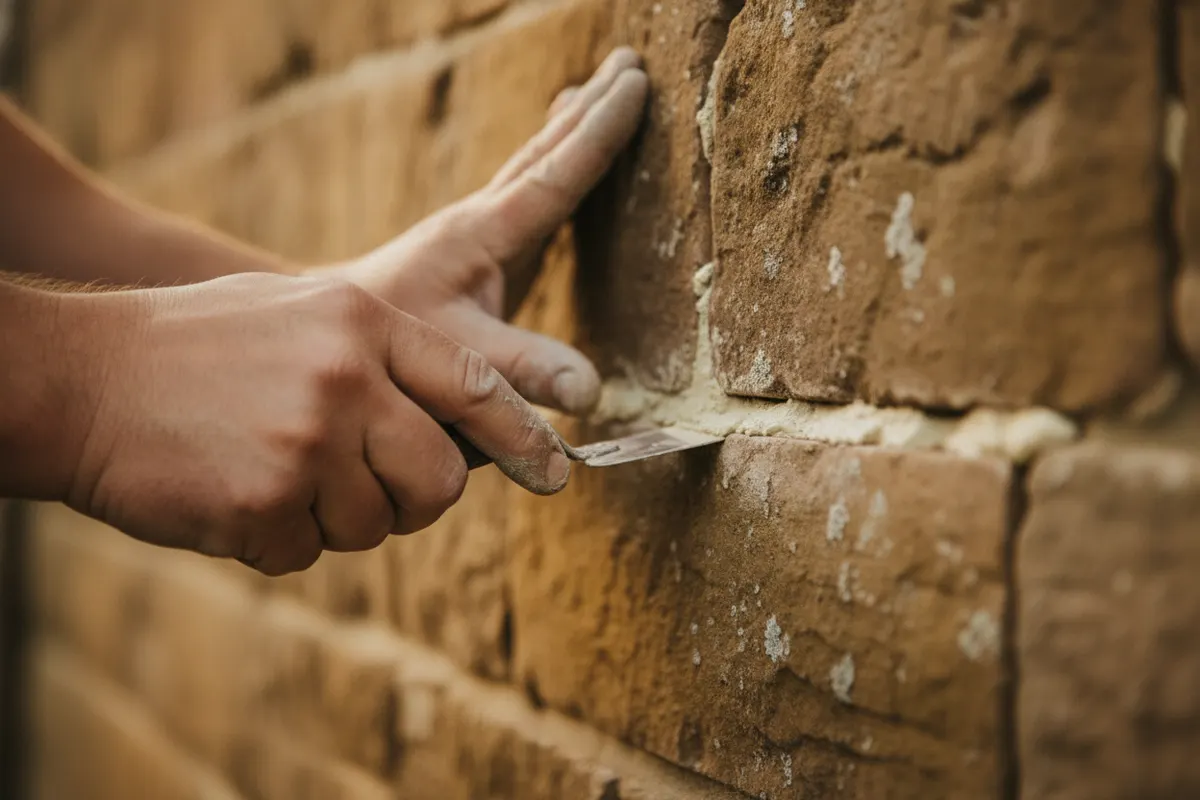
Full restoration on historic homes in Chattanooga draws from a narrow set of trades. On a ridge house the mix is usually millwork and carpentry, masonry, building envelope and moisture control, and one or two custom fabrication shops for lighting, hardware or specialty metal. Every one of those trades is scarce around historic homes in Chattanooga, and each has a small local bench.
Millwork covers everything from replacement newel posts to full custom door units. On a preservation job the shop needs to grind custom knives to match original profiles rather than substitute a stock bead. Masonry covers stone repair, tuckpointing with the correct lime-to-sand ratio for the original mortar, and any chimney or foundation rebuild. The wrong mortar mix can crack the surrounding stone within a decade.
Finding those trades is harder than it was ten years ago. Craftsmen who can execute a proper three-coat lime plaster repair rather than patching with pre-mixed gypsum are scarce in most metros, Chattanooga included, and period-profile cypress siding is no longer a stock item; it is run to order by specialty mills, often in Louisiana, with lead times measured in weeks rather than days. Owners planning a restoration project need to build that supply reality into their schedule from the first budget conversation.
Envelope and moisture work is the least visible and the most consequential. A ridge house sits in weather. Old flashings, cast iron gutters, and single-plane walls each need a decision about repair versus upgrade. The Secretary of the Interior's Standards favor repair over replacement and compatible materials over modern substitutes. On heating and cooling upgrades, our post on whole-home energy efficiency upgrades shows how to add performance without rewriting the envelope.
Frequently asked questions
Which properties count as historic homes in Chattanooga?
Two groups. First, anything inside the four locally designated districts: St. Elmo, Battery Place, Ferger Place and Fort Wood. Second, individually designated landmarks, a list with exactly one entry, the Shavin House, and the city has not added another since 1995, per Chattanooga Times Free Press and Local 3 News reporting. Plenty of significant ridge and mountain houses carry no designation at all; age and quality alone do not put a property under review, and an undesignated house can still be National Register eligible.
Does National Register listing prevent me from renovating my house?
No. For a privately owned home renovated with private money, National Register listing does not restrict changes, per National Park Service guidance. Federal review only kicks in when federal money, permits, or licenses are involved. Listing does provide documented significance, resale prestige, and, for income-producing property, eligibility for federal historic rehabilitation tax credits equal to 20 percent of qualified rehabilitation expenditures. If your property is also inside a local historic district or designated as a local landmark, the review that governs exterior work comes from the city's historic zoning process, not the National Register. The two systems get confused often; only one restricts changes for a private owner.
When do I need historic zoning approval before starting exterior work?
Treat it as a sequence. First confirm the property's status on the city's historic zoning map, which covers every one of the designated historic homes in Chattanooga. If it is designated, file the certificate application with dimensioned drawings and labeled material samples before any exterior work that is visible from a public right of way, and let staff review run before you schedule trades. Interior-only work generally skips review, and emergency weather repairs move through an expedited path but still end with certification. When in doubt, a call to the city's historic planner before the contractor mobilizes costs nothing and prevents a stop-work order.
What did the Shavin House sale tell owners of designated properties?
The August 2026 sale of the Shavin House for $4 million after 75 years of family ownership reminded owners of historic homes in Chattanooga that designation carries forward across a sale. The new buyers, a Middle Tennessee couple, take on the same historic zoning review obligations attached to the property. Karen Shavin publicly said she hopes the new owner treats it as a long-term home, per NewsChannel 9 reporting. That echoes the 1992 National Register nomination, which recorded the family's hope that future owners would respect the house's significance. Designation is durable. It survives the closing and binds the next steward.
How do I find a restoration contractor for historic homes in Chattanooga?
Look for a builder whose portfolio shows repair rather than replacement of original elements: spliced beams, dutchman patches in stone, restored sash windows, and matched trim profiles. Ask which NPS Preservation Briefs they reference and which local millwork shop and stone mason they work with. A preservation contractor keeps documentation for every change, sources compatible materials, and refers to the Secretary of the Interior's Standards as a working reference. Bidding a restoration purely on square-foot price is a warning sign; scope is defined by conditions in the building, not by generic remodel unit costs.
What are the Secretary of the Interior's Standards, and why do they matter?
They are the National Park Service benchmark for work on historic buildings, and they define four distinct treatment approaches: preservation, rehabilitation, restoration and reconstruction. Most lived-in houses follow rehabilitation, which allows modern use while keeping historic character. In practice the Standards push three habits: repair before replacement, compatible materials over modern substitutes, and reversible changes over permanent ones. Review boards and grant programs lean on them, which is why a contractor who already works to the Standards clears historic review with far less friction.
From our workshop
The work behind this
- Heritage RestorationCareful, respectful restoration of historic and character-filled homes. We work with patience and skill to preserve original beauty, revive lost detail, and honor the story of the home while preparing it for the next century.
- Remodels & RenovationsTransforming lived-in homes with respect and artistry you can feel in every detail. We bring clarity to complexity, uncover what others may have covered up, and deliver spaces that feel completely renewed yet unmistakably solid.


Thinking about a project of your own?
We start every job with a conversation. Tell us about your home and what you are imagining, and we will take it from there.
Book a Consultation