
Interior painting cost 2026: room prep, labor, and finish types
Interior painting cost 2026 breaks down by room, paint type, labor, prep, and finish. Compare DIY versus hiring a pro plus durable sheens that last for years.

What should a homeowner really budget for a fresh coat this year? Interior painting cost 2026 sits higher than pre-pandemic, but the math is knowable: room size, paint quality, sheen, prep condition, and whether you hire a crew or run rollers yourself. Two houses of the same square footage can quote thousands apart based on those variables. Read on for pricing by room, paint tier, labor rates, and the finish choices that pay off over a decade.
Interior painting cost 2026 by room, floor, and whole home
For 2026, ranges published by Remodeling Magazine's Cost vs Value report and pooled regional data from painting contractors put a bedroom repaint at roughly $300 to $1,000, a full floor of a three-bedroom home between $2,000 and $5,500, and a whole-home interior repaint at $4,000 to $12,000 in most metros. Interior painting cost 2026 climbs with ceiling height, trim complexity, and drywall prep.
Benchmarks worth pinning down before you request quotes:
- Small bedroom (10x12, 8-ft ceilings): $300 to $700.
- Primary bedroom or living room (14x18): $500 to $1,400.
- Kitchen walls with cabinets excluded: $500 to $1,200.
- Bathroom: $250 to $700 depending on tile lines and fixture masking.
- Hallways and stairwells with high ceilings: $600 to $1,800 for ladder and scaffold work.
- Whole three-bedroom, two-bath interior: $4,000 to $9,500 for one wall color and one trim color.
| Room | Wall area (approx sq ft) | Pro cost 2026 | DIY materials cost |
|---|---|---|---|
| Small bedroom (10×12, 8-ft ceiling) | 320 | $300 to $700 | $80 to $130 |
| Primary bedroom or living room (14×18) | 450 | $500 to $1,400 | $120 to $200 |
| Kitchen walls (cabinets excluded) | 380 | $500 to $1,200 | $110 to $180 |
| Bathroom | 160 | $250 to $700 | $60 to $100 |
| Hallway or stairwell | 280 | $600 to $1,800 | $100 to $200 |
| Whole 3BR/2BA interior | 2,200 | $4,000 to $9,500 | $700 to $1,400 |
The single biggest cost lever is ceiling height. A room with a 9-ft ceiling adds roughly 12 percent to labor over an 8-ft ceiling; a 10-ft ceiling can add 20 to 30 percent, and open stairwell voids sometimes double a room's line item, per JLC Online field breakdowns. The second lever is prep. Nail pops, old wallpaper, water stains, and nicotine haze each add hours of scraping, patching, and priming that bidders quote as extras once they see the walls in daylight. For a broader remodel-budget picture, our kitchen remodel cost 2026 guide uses the same per-square-foot logic.
Paint type, sheen, and brand: how they shape interior painting cost 2026
Paint materials account for 15 to 25 percent of a painter's line item, but tier choice controls how long the finish lasts. Contractor grade runs $20 to $30 per gallon. Mid-tier consumer paint (Sherwin-Williams SuperPaint, Behr Marquee) runs $35 to $55. Premium tiers (Benjamin Moore Aura, Farrow & Ball) run $60 to $110. Interior painting cost 2026 shifts materially with paint tier.
Common sheens and where they fit:
- Flat / matte: forgives wall imperfections, harder to clean, best for adult bedrooms and low-traffic ceilings.
- Eggshell: soft sheen, wipeable, default for living rooms and hallways.
- Satin: subtle sheen, easier to clean, common for kids' rooms and family spaces.
- Semi-gloss: reflective, cleans hard, standard for trim, doors, and bathroom walls.
- High-gloss: near-mirror finish for cabinets, statement doors, and library shelving.
Higher sheens cost slightly more per gallon and demand more careful prep because they read every roller mark and drywall dimple. The Architectural Digest paint sheen guide recommends satin or eggshell for most living areas, hitting a sweet spot between washability and hiding drywall texture. For interior painting cost 2026, sheen choice works together with paint grade to determine how many years pass before walls need a fresh coat. A contractor-grade flat paint on a high-traffic hallway may look worn within three years; a premium satin in the same space holds eight to ten years before showing age. Spread that gap across a whole-house repaint and the labor savings from one fewer repaint cycle cover the per-gallon premium on the first application. Field painters working with premium sheens also report fewer touch-up callbacks: the paint holds its finish even where tape was pulled and in corners where rollers overlap, which matters on occupied homes where owners notice defects quickly.
Volatile organic compound (VOC) content matters for household health. Under its indoor air quality program, the EPA flags high indoor VOC levels as a risk, especially for children, elderly residents, and anyone with asthma. Paints labeled low-VOC hold under 50 grams per liter; zero-VOC under 5 g/L. Zero-VOC paints add roughly 10 to 20 percent to material cost but let occupants sleep in the room the same night without lingering solvent smell.
Labor rates and prep inside interior painting cost 2026
Professional labor is the largest slice of interior painting cost 2026. National averages sit at $2 to $6 per square foot of wall surface, or $25 to $75 per hour per painter, based on cost data tracked by This Old House. A three-person crew on a two-story home typically covers 400 to 700 square feet of wall per day depending on how much surface prep is required.
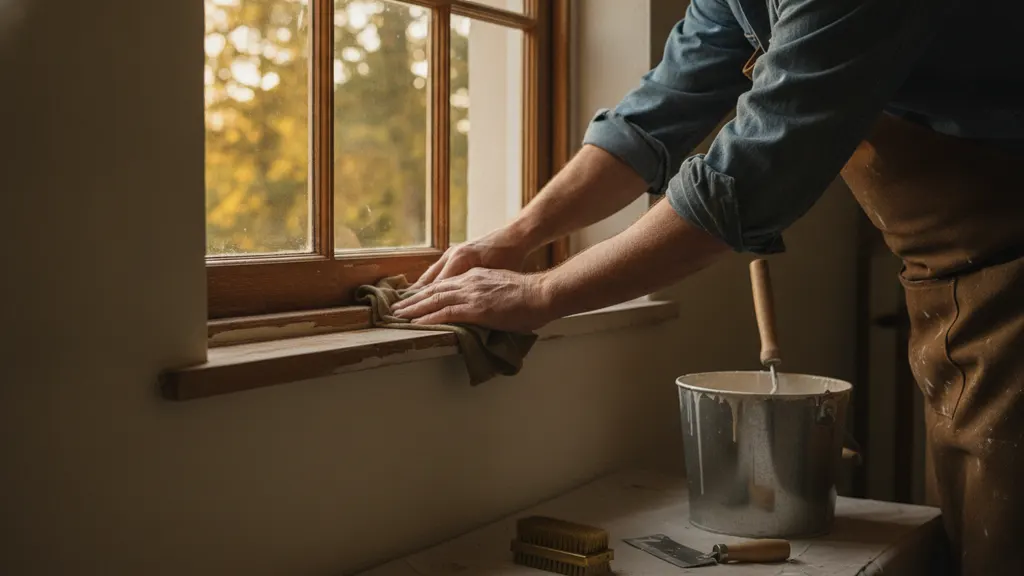
Standard prep included in most quotes:
- Furniture pull-away, drop cloths, and plastic sheeting on floors and fixtures.
- Nail-hole filling with lightweight spackle, plus spot sanding.
- Painter's tape on trim, outlets, and switch plates.
- One coat of primer over patched or stained areas.
- Two finish coats on all wall surfaces.
Add-ons that raise the quote:
- Wallpaper removal ($1 to $3 per sq ft, more if the backing tears drywall).
- Full-coverage skim coat for texture removal or old lead-paint encapsulation ($2 to $5 per sq ft).
- Popcorn ceiling scrape and refinish (often quoted separately, $1 to $2 per sq ft plus disposal).
- Lead-safe work practices in pre-1978 homes.
James Kellaghan, Founder of James & Co: "On a 1952 colonial in Dobbs Ferry, New York, we quoted a full interior repaint in 2025 against two lower bids. A lead swab test came back positive on every window sill. Neither competing bidder carried EPA RRP certification, and neither quote included containment or HEPA cleanup. Our certified process added $1,400 to a $3,900 base quote, but the homeowner avoided lead-contamination liability that runs $15,000 or more when dust migrates to neighboring rooms. Do not let a lower bid without cert documentation win on price alone."
That last item is not optional. The EPA Renovation, Repair, and Painting (RRP) Rule requires any contractor disturbing more than six square feet of interior paint in a pre-1978 home to be RRP-certified and to follow lead-safe practices: containment, HEPA vacuums, wet sanding, and cleanup verification. Ask for the firm's EPA cert number in your quote. Uncertified crews come in cheaper for a reason, and owners can be liable for lead-contamination cleanup when paperwork is missing.
Interior painting cost 2026: DIY versus hiring a professional crew
For a single bedroom with sound walls, DIY cuts interior painting cost 2026 by 60 to 80 percent against pro rates. Materials for one 12x14 room run $80 to $180 (two gallons of good paint, roller kit, tape, tarps), and a careful weekend yields a repaint that will hold up. That is one-third to one-fifth of what a pro line item would show. The math flips fast on bigger jobs.
DIY makes sense when:
- Walls are in good condition (no water stains, popcorn ceilings, wallpaper, or lead concerns).
- Ceilings are 8 or 9 ft.
- You already own a solid extension pole, drop cloths, and a decent brush and roller.
- You have two clear weekend days and can move furniture yourself.
Hire a pro when:
- The home is pre-1978 (lead-safe rules apply).
- Ceilings are 10 ft or taller, or there are stairwells with drops.
- You want oil-primer-plus-two-coats on stained cabinetry or built-ins.
- The whole interior is on a resale timeline. NAHB Cost vs Value benchmarks place fresh interior paint among the top three cosmetic pre-sale upgrades because the payback shows up in listing photos and buyer walk-throughs, not just material lift.
A hybrid works too. Hire out ceilings, stairwells, and trim; DIY the bedrooms. Hybrid jobs typically land 30 to 45 percent below full-service pricing.
Trim, ceilings, and accent walls in your painting budget
Trim, ceilings, and accents change interior painting cost 2026 estimates more than most homeowners guess. A wall-only quote can expand 30 to 60 percent once ceilings and trim are added. Ask any bidder to break out four line items: walls, ceilings, trim, and specialty (accent, wainscoting, cabinets).
Trim:
- Semi-gloss enamel on complex trim: $3 to $7 per linear foot; less for straight baseboard.
- Doors: $75 to $150 each painted, both sides.
- Built-in cabinets: $50 to $100 per door and drawer front, spray-finished if the shop has a booth.
Ceilings:
- Flat white on a smooth ceiling: $1 to $2 per sq ft.
- Textured or popcorn ceiling: add $0.75 per sq ft for surface complexity, more with a skim coat.
- Coffered or beamed ceilings: quoted by the piece.
Accent walls:
- Single accent wall in a color-matched paint: $150 to $400 depending on room size.
- Wainscoting-plus-color combinations: $500 to $1,200 add-on.
Sequencing matters too. Paint before flooring almost always, except for site-finished hardwood where you cut in first, install floors, then do a light second cut afterward. Our hardwood floor installation cost 2026 guide covers the paint-then-floor question in more detail. Planning trim work with a bath refresh? The bathroom remodel cost guide covers the tile-and-trim interface, and our home office addition guide shows how paint choices tie into an addition's finish schedule.
Frequently asked questions
How much does it cost to paint a room in 2026?
For a standard 10-by-12 or 12-by-14 bedroom with 8-ft ceilings and sound drywall, a pro repaint runs $300 to $950 in most US metros in 2026, per pricing published on Houzz remodeling reports. That covers two coats of a mid-tier paint, standard prep (spackle, tape, drop cloths), and one accent color if you want it. DIY on the same room runs $80 to $180 in materials but eats a careful weekend. Bathrooms often cost slightly less unless you have heavy grout masking; kitchens with cabinet work cost more. Ceiling height and trim complexity swing the number more than color choice does. Get at least two bids before signing: a solo operator often quotes 15 to 25 percent below a full-service painting company for the same scope, with the tradeoff of slower scheduling and less warranty coverage on the work.
What is the interior house painting cost per square foot in 2026?
Interior painting cost 2026 for professional labor sits at $2 to $6 per square foot of wall surface (not floor area), based on regional pricing tracked by This Old House. That number is inclusive of drop cloths, tape, spackle, primer, and two finish coats of contractor-grade paint. Move up to premium paint and the range moves to $3 to $8 per square foot. Add ceilings and the whole-project floor-area figure lands closer to $3.50 to $7 per square foot of floor space, which is a useful conversion when comparing a bedroom quote to a whole-home quote. Regional labor markets move that floor meaningfully: New York and San Francisco metro bids routinely clear $7 to $9 per square foot of wall on older housing stock, while smaller Midwest markets typically land at $2.50 to $4. Always confirm whether a quote is per square foot of wall or per square foot of floor before comparing bids.
When should I hire a professional painter versus DIY?
Interior painting cost 2026 tilts toward hiring a pro if the home is pre-1978, ceilings run 10 ft or higher, walls have water stains, wallpaper, or nicotine haze, or you are painting on a resale timeline. The EPA RRP Rule requires certified crews on pre-1978 homes, and NAHB Cost vs Value data ranks fresh interior paint among the top pre-sale ROI upgrades in Remodeling Magazine's annual report. DIY makes sense on small rooms with 8-ft ceilings, sound drywall, and a two-weekend window. If you have never cut in a straight line without tape, start with a closet or laundry room to practice technique. A hybrid approach works well for many households: hire a crew for ceilings, stairwells, and trim where errors show, and roll the bedroom walls yourself. That split typically lands 30 to 40 percent below a full-service quote while keeping the high-visibility work in professional hands.
How does paint quality affect long-term cost?
Paint quality quietly shifts interior painting cost 2026 over a decade. A premium paint at $70 per gallon versus a $25 contractor grade can double the years between repaints. Premium paints cover in one coat more often, resist scrubbing, and hold color under sunlight. Over a 10-year window, a premium paint on a whole-home job saves $2,000 to $4,500 in future labor even though it costs $400 to $900 more up front, per JLC Online field breakdowns. Lighter-color walls also cut daytime lighting energy use, per Department of Energy home efficiency guidance. The trade only holds if prep is done right. Benjamin Moore Aura, for example, carries a lifetime warranty when applied per manufacturer specifications, a guarantee no contractor-grade product matches. That warranty is transferable and can appear on a home disclosure form, giving premium paint a measurable resale benefit beyond the per-gallon cost.
What are low-VOC and zero-VOC paints, and are they worth it?
Volatile organic compounds off-gas into indoor air for weeks after paint dries. The EPA indoor air quality program flags high indoor VOC levels as a household health concern, especially for children, elderly residents, and anyone with asthma. Low-VOC paints hold under 50 g/L; zero-VOC under 5 g/L. Expect a 10 to 20 percent material premium at the paint counter. In tight, sealed modern homes, or during winter when windows stay shut, that premium buys same-night occupancy without headaches or lingering solvent smell for kids and pets who share the room. California, Washington, and Maryland enforce stricter state VOC ceilings than the federal standard, and several national brands now produce a compliant low-VOC formulation that ships nationally. If your painter sources paint from a big-box chain rather than a professional supply house, confirm the specific formulation before work begins.
How do lead paint rules affect the estimate on an older home?
If your home was built before 1978, any painter disturbing more than six square feet of interior paint must be EPA RRP-certified and use lead-safe practices, per EPA lead-hazard resources. That typically adds $8 to $15 per square foot of disturbed surface to the quote for containment, HEPA vacuum use, wet sanding, and cleanup verification. Ask any bidder for the firm's EPA cert number before signing. Owners who hire uncertified crews on pre-1978 homes assume liability for lead contamination and can face fines. Test kits cost $10 to $25 per swab; full assessments run $300 to $600. Unregulated dry sanding on lead-painted surfaces can generate airborne dust at concentrations far above the EPA hazard threshold, per National Lead Information Center data. If you plan DIY painting in a pre-1978 home, use an approved swab test first and confine all sanding to wet techniques inside a sealed work area.
From our workshop
The work behind this
- Remodels & RenovationsTransforming lived-in homes with respect and artistry you can feel in every detail. We bring clarity to complexity, uncover what others may have covered up, and deliver spaces that feel completely renewed yet unmistakably solid.
- Custom Cabinets & KitchensHandcrafted in our Chattanooga workshop and installed by our own team, with options ranging from high-gloss finishes to solid oak, mahogany, and American walnut.


Thinking about a project of your own?
We start every job with a conversation. Tell us about your home and what you are imagining, and we will take it from there.
Book a Consultation