
Bathroom remodel cost guide: scope, materials, and ROI in 2026
Bathroom remodel cost guide for 2026: real budgets by scope, fixture value picks, permit rules, timelines, and resale ROI backed by NKBA and Houzz data.

What does a real bathroom remodel cost in 2026, and where does that money actually go? James & Co was founded in 2008 after James Kellaghan earned his Oregon CCB general contractor license; working across Oregon and Washington, the practice has since led more than 130 primary bathroom remodel projects. The NKBA puts a primary bath renovation between $25,000 and $75,000, but the finish tier, whether you move plumbing walls, and which fixtures you keep can swing the number by tens of thousands. This guide breaks the spend down by scope, calls out where the value hides, and shows what resale actually pays back.
What does a bathroom remodel cost by project scope in 2026?
The single most useful lens on bathroom remodel cost is scope. NKBA benchmark data puts a primary bathroom renovation between $25,000 and $75,000 in 2026, with room size and finish tier driving most of that spread. A cosmetic refresh that keeps the footprint intact runs lower; a gut renovation opening walls pushes toward the high end.
Three scope tiers dominate real project pricing. A cosmetic refresh replaces the vanity, mirror, toilet, faucets, and paint while keeping plumbing rough-ins where they are. A midrange remodel adds new tile, a rebuilt shower, updated lighting, and often a fan upgrade. A full gut renovation opens walls, relocates fixtures, upgrades supply and drain lines, and typically resets the entire finish schedule.
| Scope | Typical range | Timeline | Permit needed |
|---|---|---|---|
| Cosmetic refresh | $8,000 to $18,000 | 2 to 3 weeks | Usually no |
| Midrange remodel | $20,000 to $45,000 | 4 to 6 weeks | Yes |
| Full gut renovation | $45,000 to $95,000+ | 6 to 9 weeks | Yes, multiple |
The 2024 Houzz U.S. Bathroom Trends Study found that primary bath spend has continued to climb faster than guest bath spend, driven mostly by larger shower footprints, higher-end tile, and heated flooring. Guest baths generally run 25 to 40 percent lower on the same scope tier because the rooms are smaller and homeowners typically choose lighter finishes.
Which fixtures and materials shape bathroom remodel cost the most?
Once the scope is set, the fixture and material schedule drives the rest of the bathroom remodel cost. The shower alone frequently accounts for 20 to 30 percent of a midrange project, per This Old House cost breakdowns, once you include the pan, a bonded membrane waterproofing assembly (a flexible waterproof sheet adhered continuously to all substrate surfaces to form a watertight barrier behind tile), tile, glass, valve, and trim. Vanities, countertops, and tile flooring together typically make up another third.
The highest-value picks in the current market are usually mid-tier ceramic or porcelain tile in a large format, a solid-wood vanity with a quartz or engineered stone top, a single-lever pressure-balanced shower valve (a valve that automatically maintains constant water temperature when pressure elsewhere in the home fluctuates) from a major brand, and a code-compliant exhaust fan sized to the room. These read as premium at inspection and to buyers without pushing the budget into the upscale tier. Imported natural stone, custom glass, heated floors, and smart toilets are the categories that most commonly blow past initial estimates.
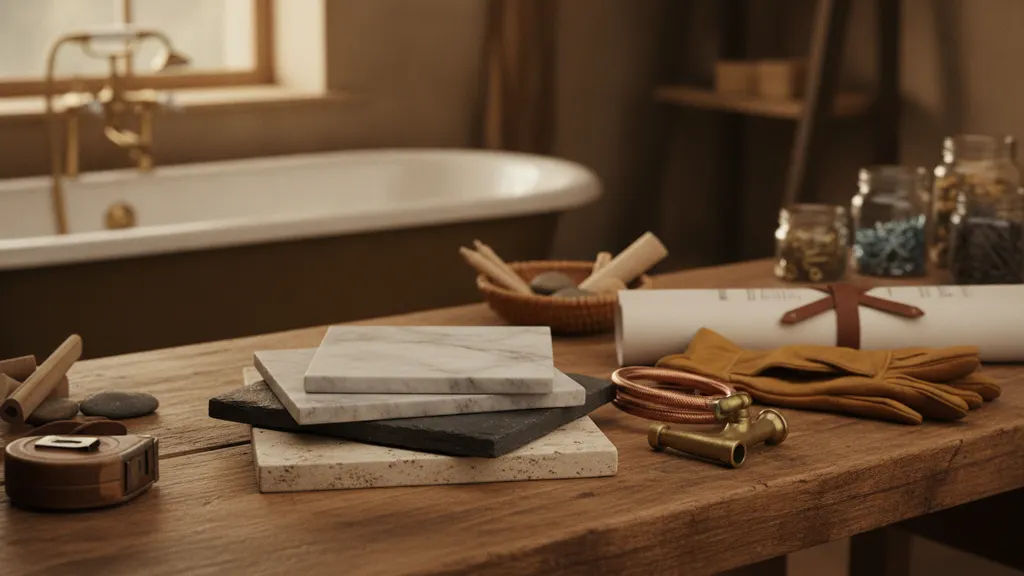
For finish tiers, we recommend clients think in three buckets and hold the line. Builder grade is what came out; midgrade is the sweet spot for resale and daily use; upscale is where you stop only for the pieces you touch every day, like the shower valve and the vanity faucet. Trying to hit upscale on everything is where budgets typically double without a proportional bump in perceived value. See our kitchen budget guide for a parallel breakdown on the other room where finish-tier discipline matters most.
How long does a bathroom renovation take from demo to final walk?
Timeline and bathroom remodel cost both scale with scope, not with square footage. A cosmetic refresh with no plumbing changes runs two to three weeks. A midrange remodel that rebuilds the shower, retiles the floor, swaps the vanity, and updates lighting runs four to six weeks. A full gut with fixture relocation, opened walls, and rough plus final inspections generally runs six to nine weeks.
The variables that most often extend timelines are custom tile lead times, imported stone, glass shower door fabrication, and backordered fixtures. Ordering the full finish schedule before demo starts, rather than during rough-in, is the single change that saves the most calendar time. Weather affects roof or exterior vent work; freeze events pause pressure testing.
What permits and inspections shape bathroom remodel cost?
Almost every scope beyond a straight fixture swap requires a permit, and the inspection cadence directly shapes bathroom remodel cost and timeline. NAHB guidance for homeowners notes that any project moving plumbing, altering framing, adding a circuit, or installing a new exhaust fan typically needs a building permit plus plumbing and electrical sub-permits.
Inspectors verify rough plumbing pressure tests, GFCI protection at every outlet within six feet of a water source, tempered glass at the shower enclosure, and a bath fan vented to the exterior rather than into an attic. Skipping permits is the single most common finding home inspectors flag at resale, and correcting unpermitted work retroactively often costs more than pulling the permit at the outset. If your project touches structural framing or adds square footage, the scope crosses into the same permit path as a primary suite addition, which is worth reading before you finalize plans.
Aging-in-place features like curbless showers, blocking for future grab bars, and a comfort-height toilet do not increase permit fees, but they do lock in universal design value that reads well to inspectors and to buyers. Building code updates in most jurisdictions now recognize these features as best practice rather than special accommodations.
How much does a bathroom renovation add to home resale value?
The 2025 Cost vs. Value report from Remodeling magazine puts a midrange bathroom addition recouping approximately 54 percent of project cost at resale. Midrange bathroom remodel cost on existing space outperforms additions because it upgrades what you have rather than adding square footage that appraises unevenly. Upscale overhauls recoup less; appraisers note improved condition when comps are dated.
The strongest resale return comes from correcting deferred maintenance, replacing dated vanities and tile, upgrading the shower, and improving ventilation before a listing. Real value at resale also comes from the buyer's not-to-do list: a modernized primary bath is a project they no longer need to plan.
For homeowners weighing bathroom work against other projects, Houzz survey data shows that kitchens and bathrooms remain the two rooms buyers cite most often as decisive when evaluating a home. Comparing your options against a whole-home energy efficiency plan is worth doing before you commit the budget.
What raises bathroom remodel cost the most, and how to control it?
Four factors account for the majority of bathroom remodel cost overruns in the residential market: moving plumbing walls, upgrading electrical service, custom tile work with extended lead times, and change orders issued after demo begins. Moving a toilet or shower drain adds $2,000 to $8,000 depending on floor construction and slab access. Adding a circuit for heated floors or a smart toilet runs $800 to $2,500. Custom or imported tile ordered mid-project extends timelines by two to four weeks and carries fabricator rush fees. Change orders placed after the first wall opens typically carry a 15 to 25 percent premium over the same work priced before demo. Discovery items hidden inside walls, including corroded galvanized pipe, aging cast-iron drains, and rotted subfloor framing, are the most unpredictable line in any budget because their full extent cannot be assessed until the wall is open.
In a 2023 Beaverton gut renovation, our initial bathroom remodel cost estimate was $43,500. Demo opened the primary shower wall and found corroded galvanized supply lines feeding a cast-iron drain with two cracked sections; pipe replacement added $7,200. The subfloor under the tub had absorbed moisture for years and required full replacement, adding $3,900 more. The final invoice was $56,400. That project now anchors how we approach pre-1975 homes: we run a pre-demo assessment, price a mandatory 15 percent discovery contingency, and walk the client through what hidden infrastructure failure looks like and what it costs before the first wall opens.
The most effective cost controls are simple: finalize the design and finish schedule before demo, order the full fixture package before the first wall opens, hold a 10 to 15 percent contingency for discovery, and get inspections scheduled the day rough-in is called. A well-run midrange bathroom remodel cost estimate should be within 8 to 12 percent of the final invoice when this discipline holds. Historic properties add another layer, similar to what we cover in our historic home renovation guide, because original plaster, lath, and non-standard framing routinely need remediation before new work can start.
Frequently asked questions
How much does a full bathroom remodel cost in 2026?
According to the NKBA, a primary bathroom remodel typically runs $25,000 to $75,000, with the spread driven by square footage, whether plumbing walls move, and finish tier. A cosmetic refresh keeping the existing footprint can land between $8,000 and $18,000 with midgrade fixtures, while a gut renovation that relocates the shower or tub and updates the vent stack often crosses $60,000 in metro markets. Guest baths run 25 to 40 percent lower than primary suites because rooms are smaller, fixture counts are lower, and homeowners typically choose lighter finish tiers.
What is the ROI on a bathroom renovation at resale?
Remodeling magazine's 2025 Cost vs. Value report shows a midrange bathroom addition recouping approximately 54 percent of project cost at resale, while a midrange bathroom remodel recovers a higher share because it upgrades existing space rather than adding square footage. Upscale primary bath overhauls recoup less on a percentage basis, but appraisers generally credit the improved condition when comparable homes in the neighborhood have not been updated. The strongest return comes from correcting deferred maintenance, replacing dated vanities and tile, and improving ventilation before a listing.
How long does a bathroom renovation take from demo to final walk?
A cosmetic bathroom refresh with no plumbing changes typically runs two to three weeks. A midrange remodel that reworks the shower, tile, vanity, and lighting runs four to six weeks. A full gut renovation that relocates fixtures, opens walls for new supply and drain lines, and passes rough and final inspections generally takes six to nine weeks, per Houzz survey data cited by This Old House. Custom tile, imported stone, or backordered fixtures can extend timelines by two to four weeks, so ordering everything before demo starts is standard practice.
Do I need a permit to remodel my bathroom?
Yes for most work beyond paint and swap-in fixtures. Any project that moves or adds plumbing, alters framing, upgrades electrical circuits, or adds an exhaust fan requires a building permit and, in most jurisdictions, plumbing and electrical sub-permits. Inspectors verify rough plumbing pressure tests, GFCI protection at outlets within six feet of a water source, and code-compliant ventilation. NAHB guidance notes that unpermitted bathroom work is one of the most common issues flagged by home inspectors at resale, and correcting it retroactively often costs more than pulling the permit up front.
Should I choose a walk-in shower or keep a tub in a primary bathroom?
Houzz's 2024 U.S. Bathroom Trends Study found that walk-in showers replaced or eliminated tub fixtures in the majority of renovated primary bathrooms, reflecting how buyers now weigh curbless entry, larger shower footprints, and aging-in-place value. Real estate advice still holds that at least one bathtub should remain in the home for buyers with young children, so if the primary is the only tub, keeping a soaking tub or freestanding model in the plan protects future resale. Guest baths without a tub are broadly accepted when another tub exists in the house.
Which single upgrade delivers the best value in a bathroom remodel?
Ventilation and waterproofing return the most value per dollar. A properly sized bath fan vented to the exterior prevents the mold, peeling paint, and rotted subfloor that shorten the lifespan of every other finish. Waterproofing the shower with a bonded membrane assembly, rather than relying on cement board alone, protects framing and stops leaks that can cost tens of thousands to remediate. After those, replacing a builder-grade vanity and mirror with a solid-wood vanity and a task-lit mirror typically reads as premium to buyers without pushing the budget into the upscale tier.
From our workshop
The work behind this
- Remodels & RenovationsTransforming lived-in homes with respect and artistry you can feel in every detail. We bring clarity to complexity, uncover what others may have covered up, and deliver spaces that feel completely renewed yet unmistakably solid.
- Custom Cabinets & KitchensHandcrafted in our Chattanooga workshop and installed by our own team, with options ranging from high-gloss finishes to solid oak, mahogany, and American walnut.


Thinking about a project of your own?
We start every job with a conversation. Tell us about your home and what you are imagining, and we will take it from there.
Book a Consultation