
Driveway replacement cost in 2026: materials, labor, and curb appeal
Driveway replacement cost in 2026 by material, square footage, prep, and permits, plus rebates and contractor vetting for lasting curb appeal.

What is a realistic driveway replacement cost in 2026 for a two-car pad that will actually last, not just look good for the listing photos? For most homeowners the honest answer is a range, not a number, and the range shifts fast once you factor material choice, tear-out, grading, and permit fees. This guide walks the math the way a builder walks a site, so you can price the job before the first bid lands in your inbox.
How much does driveway replacement cost in 2026 by material and square footage?
A useful driveway replacement cost estimate in 2026 starts with the finished square footage and the material. A single-car pad averages about 300 square feet, a two-car pad about 600, and a long rural drive can push past 1,200 before any turnaround or apron work. Multiply that footprint by a per-square-foot range, then add prep.
For plain gray concrete, contractor pricing data referenced by Remodeling magazine put a 600-square-foot driveway at roughly $3,600 to $7,200 installed in 2024-2025, or about $6 to $12 per square foot. Asphalt often lands lower per square foot, pavers meaningfully higher, and gravel lowest on install but highest on annual upkeep. This Old House publishes similar ranges in its material lifespan and installation guides for homeowners comparing driveways.
| Material | Installed range (per sq ft) | 600 sq ft total | Typical lifespan |
|---|---|---|---|
| Gravel | $1 - $3 | $600 - $1,800 | 4 - 10 years with regrading |
| Asphalt | $4 - $8 | $2,400 - $4,800 | 15 - 20 years |
| Concrete | $6 - $12 | $3,600 - $7,200 | 30 - 50 years |
| Interlocking pavers | $14 - $28 | $8,400 - $16,800 | 25 - 50 years |
Two site variables move these numbers more than any brand or blend: thickness and reinforcement. A four-inch concrete pour is standard for cars, but a heavier vehicle or an RV pad wants five to six inches with rebar or fiber mesh, which adds material and labor. For asphalt, a two-inch surface course over a properly compacted three-inch base is a common residential spec.
Concrete, asphalt, pavers, and gravel: durability trade-offs behind the driveway replacement cost
At $6 to $12 per square foot installed and a 30-to-50-year lifespan, plain concrete works out to roughly $0.12 to $0.40 per square foot per year of service. Asphalt at $4 to $8 installed but only 15 to 20 years of life runs $0.20 to $0.53 per square foot per year, not counting sealcoating every three to five years. That gap in annualized driveway replacement cost makes concrete the better math for any homeowner who plans to stay in the house a decade or more. Pavers carry the highest upfront ticket and the best long-term repairability. Gravel keeps initial outlay low and trades that saving for ongoing regrading costs.
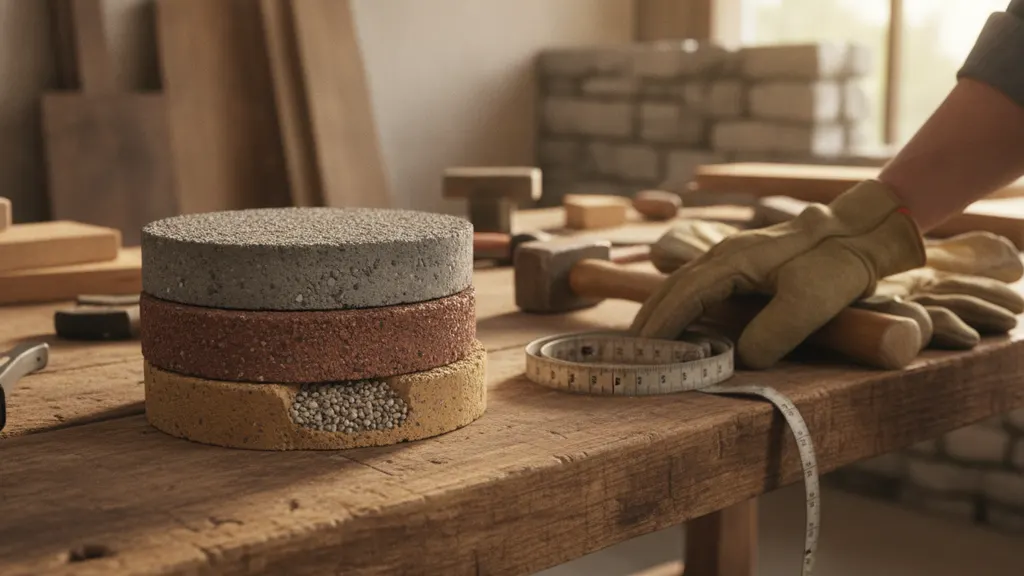
According to This Old House material lifespan guides, a properly sealed concrete driveway typically lasts 30 to 50 years, while asphalt lands in the 15 to 20 year window before it needs full replacement. Pavers can match or beat concrete on lifespan because individual units can be lifted and reset, and the base can be regraded without a full tear-out. Gravel is essentially a rolling maintenance line item.
Climate should tilt the choice. In the mid-South and Southeast, freeze-thaw cycling is mild and either concrete or asphalt performs well. In the upper Midwest and Northeast, deep frost heaves punish rigid slabs, and asphalt or a well-drained paver system is often the safer bet. Coastal salt exposure is hard on both, so specify appropriate sealers and consider stainless edge restraints for pavers.
Site prep, grading, and demolition inside the driveway replacement cost
Roughly a fifth of a typical driveway replacement cost lives in the invisible work below grade. Demolition of an existing four-inch concrete slab runs into real tonnage, and haul-off is priced by the yard at the landfill. Add saw-cutting, asphalt milling, or root removal near mature trees and the prep line grows quickly.
Grading is the second hidden cost. A properly designed drive slopes at least one to two percent away from the house, with any low corner routed to daylight or a drain. If the old drive was ponding water, expect the crew to cut fill, import stone, and possibly install a trench drain before pouring. Base preparation guidance from the National Association of Home Builders (NAHB) and independent contractor references at JLC Online consistently emphasize four to six inches of compacted aggregate under any rigid or flexible pavement.
On a 2024 project outside Charlotte, North Carolina, I pulled up a 12-year-old asphalt drive that had been laid directly over clay fill with no aggregate base. The surface looked acceptable from the street, but the whole pad had migrated two inches toward the house, sending water straight at the foundation wall. The correct driveway replacement cost for that job nearly doubled once we added the French drain, import stone, and full regrade that the original installer had skipped.
Permits, aprons, and the public right of way
Most cities and counties require a permit for a full driveway replacement, and any work in the public right of way, including the apron that connects your drive to the street, often requires a separate street cut permit and a bonded contractor. Permit fees typically run $50 to $500 depending on jurisdiction. Skipping permits can void insurance and force a rip-out later. Ask your city or county public works department for the driveway standard detail before you finalize the design.
Runoff, downspouts, and the small drainage fixes worth doing now
While the crew has the site open, it is cheap to tie downspout leaders under the new slab or paver base and route them to daylight. The EPA Soak Up the Rain program has clear homeowner guidance on managing roof and driveway runoff without piping straight to the street. This is often a few hundred dollars added to the driveway job, versus thousands to trench a finished drive later.
Rebates, incentives, and permeable options that lower long-term driveway replacement cost
Some of the biggest wins on driveway replacement cost show up after the invoice, in the form of stormwater fee credits and utility rebates for permeable surfaces. Interlocking concrete pavers are individual manufactured units set in a sand-setting bed over a compacted open-graded aggregate base, a design that lets water drain through the joints rather than sheet across the surface. That permeability can cut runoff by 80 to 100 percent, which is why many municipal stormwater utilities pay you to switch away from a fully impervious slab.
Program specifics vary. Look for your city or county stormwater utility website, and search for terms like credit, retrofit, or green infrastructure. The EPA WaterSense and EPA Green Infrastructure hubs collect model policies that many local programs are built on. Federal energy incentives generally do not cover driveways, but if you are pairing this project with a broader exterior upgrade, review our whole-home energy efficiency guide for programs that may stack.
Permeable pavers are not the only path. Turf-block grids, gravel over a geotextile, and open-jointed concrete slabs also earn credits in some cities. The design requirement, in almost every case, is documented infiltration performance and a maintenance plan the utility can inspect.
For a closer look at this, see Window replacement cost 2026: energy savings, options, and rebates.
How to vet contractors and structure bids to control your driveway replacement cost
The fastest way to control driveway replacement cost is to control the bid document. Write a one-page scope that lists the finished square footage, thickness, reinforcement, base depth, apron detail, and disposal responsibility. Send the same page to three licensed and insured contractors and ask each one to quote line by line.
Vet each bidder the same way. Verify state licensing, ask for a certificate of insurance naming you as an additional insured, confirm workers compensation coverage, and check at least three references from jobs at least two years old so you can see how the work aged. The NAHB consumer hiring guide has a solid checklist that mirrors what a general contractor would use on a subcontractor.
Early in my career I learned that checking licensing alone is not enough. On a 2019 job in Raleigh, I hired a concrete crew that held the right license but carried no workers compensation policy. When one worker hurt his hand on site, the homeowner faced real liability exposure until we sorted the paperwork. I now require a current certificate of insurance naming the property owner as an additional insured before any crew moves dirt, and I make sure every driveway replacement cost estimate I hand a client breaks out that administrative verification as a hard line item, not an afterthought.
Payment schedule and change orders
A reasonable residential payment schedule is a modest deposit at contract signing, a draw at demolition and base completion, and the balance on final walkthrough. Any changes to scope go on a written change order signed before the extra work starts. Verbal change orders are the number one source of end-of-project disputes on driveways.
Coordinating with other exterior upgrades
If a driveway replacement is part of a bigger curb appeal push, coordinate the sequence so you are not tearing up the same ground twice. Roof, siding, and window projects usually go before final driveway pour so falling debris and staging traffic do not damage new work. Our guides on roof replacement cost, siding replacement, and outdoor living spaces can help you sequence the full exterior scope so each trade lands in the right order.
Frequently asked questions
How much does it cost to replace a two-car driveway in 2026?
For a standard 600-square-foot two-car driveway, plain concrete typically lands in the $3,600 to $7,200 range installed, per contractor pricing data referenced by Remodeling magazine. Asphalt often comes in lower per square foot but carries a shorter service life. Pavers can run two to four times the concrete number once you include the setting bed, edge restraints, and pattern labor. Site conditions, removal of the old slab, and drainage fixes push most homeowners toward the upper end. Get three itemized bids on the same scope before you compare totals.
Is concrete or asphalt a better long-term value?
Concrete generally wins on lifespan. This Old House reports that a properly sealed concrete driveway can serve 30 to 50 years, while asphalt tends to need replacement in 15 to 20 years. Annualized over those service lives, concrete at $6 to $12 per square foot installed works out to $0.12 to $0.40 per square foot per year, while asphalt at $4 to $8 runs $0.20 to $0.53 per square foot per year before you add sealcoating costs every three to five years. Asphalt is easier to patch in cold climates and carries a lower upfront number, making it a reasonable fit for a near-term sale. If you plan to stay in the home more than a decade, the concrete lifespan math typically outweighs its higher initial ticket.
Do permeable pavers qualify for stormwater rebates?
Often yes, in municipalities that follow EPA WaterSense and green infrastructure guidance. Permeable interlocking concrete pavers can cut stormwater runoff by 80 to 100 percent when installed over an engineered aggregate base, which is why many stormwater utilities offer fee credits or one-time rebates for switching from an impervious slab. A number of municipalities across North Carolina, Georgia, and Tennessee have offered residential retrofit credits ranging from $200 to $500 for qualifying permeable installations. Program names, credit sizes, and inspection requirements vary widely by city and county, so check with your local stormwater utility or public works department before you sign a contract. Ask specifically whether your design needs third-party infiltration testing to qualify, because that documentation step is the one most homeowners miss.
How long does a driveway replacement take from tear-out to drive-on?
For a typical residential driveway, plan two to five working days on site. Demolition and haul-off runs a day, grading and base compaction another day, then placement. Concrete needs about 24 hours to walk on and roughly seven days before you drive a passenger vehicle on it, with full cure strength around 28 days per common industry practice referenced by JLC Online. Asphalt can accept car traffic in one to three days once cooled. Pavers are drive-ready as soon as edge restraints and joint sand are set. Weather delays are the biggest wild card.
What site work usually gets missed in driveway bids?
The three line items homeowners most often miss in driveway replacement cost planning are drainage correction, apron and curb work, and disposal fees. If the old driveway ponded water or sloped toward the house, the new one needs regrading, and possibly a trench drain or French drain, before any pour, guidance echoed in EPA Soak Up the Rain homeowner resources. Municipal aprons that tie into the public right of way often require a separate permit and sometimes a bonded street contractor. Concrete and asphalt removal is heavy and priced by the ton at the landfill. Ask each bidder to itemize these lines so your comparison is apples to apples.
Will a new driveway actually help my home value?
A clean, level, uncracked driveway is one of the first things a buyer sees, and it materially affects showing impressions and inspection outcomes. Curb appeal projects tend to hold their value well in resale surveys published by trade groups such as the National Association of Home Builders. You will not usually recoup the full replacement cost as a line item on the appraisal, but a failing driveway can drag down offers by more than its repair cost, and inspectors routinely call out cracked or settled slabs as deferred maintenance, sometimes triggering repair credits in the thousands. If you are selling within a year, coordinate driveway timing with landscaping and exterior paint so the front elevation reads as a single refreshed package that buyers price as move-in ready rather than a work in progress.
From our workshop
The work behind this
- Remodels & RenovationsTransforming lived-in homes with respect and artistry you can feel in every detail. We bring clarity to complexity, uncover what others may have covered up, and deliver spaces that feel completely renewed yet unmistakably solid.
- Custom Cabinets & KitchensHandcrafted in our Chattanooga workshop and installed by our own team, with options ranging from high-gloss finishes to solid oak, mahogany, and American walnut.


Thinking about a project of your own?
We start every job with a conversation. Tell us about your home and what you are imagining, and we will take it from there.
Book a Consultation