
Home siding replacement cost in 2026: materials, labor, and ROI
Home siding replacement cost in 2026 runs $3 to $16 per square foot installed. Compare vinyl and fiber cement pricing, ROI, and how to hire a contractor.

What does home siding replacement cost look like in 2026, and is the investment worth it? If your fiber cement is chalking, your vinyl is cracked at the nail line, or your painted wood is holding moisture behind the film, the question stops being cosmetic and becomes structural. Over fifteen years managing exterior renovation projects, I have found that material choice and what the crew discovers at tear-off shape the final number in equal measure. Prices have shifted with lumber, labor, and lead-safe rules, and the answer depends on siding type, house size, and what gets found behind the old cladding.
How much does home siding replacement cost in 2026 by material?
Home siding replacement cost in 2026 ranges from about $3 per square foot for entry-level vinyl to $16 per square foot for premium fiber cement, installed. For a 2,000 square foot home, most projects land between $12,000 and $32,000 before extras like trim wraps, sheathing repair, and lead-safe work required on pre-1978 homes.
Material is only half the invoice. Labor now carries a bigger share than it did five years ago, and skilled carpenters who can flash a window, replace punky sheathing, and hang a straight starter course are in short supply in most markets. Their day rate has risen with everyone else's, according to housing market data from the National Association of Home Builders.
Here is how the numbers stack up per square foot installed, drawing on published cost data from Remodeling magazine's national pricing tables and installation notes from This Old House siding guides:
| Material | Installed cost per sq ft | Typical lifespan |
|---|---|---|
| Vinyl | $3 to $12 | 25 to 40 years |
| Engineered wood | $5 to $13 | 20 to 30 years |
| Fiber cement | $6 to $16 | 30 to 50 years |
| Cedar clapboard | $8 to $18 | 20 to 40 years |
| Three-coat stucco | $10 to $22 | 50+ years |
Vinyl vs. fiber cement: comparing home siding replacement cost and value
Fiber cement costs $3 to $9 more per square foot installed than vinyl on a home siding replacement cost basis, yet the Remodeling Cost vs. Value report shows fiber cement recouping close to 88% at resale, one of the strongest returns of any exterior project in the rankings. Vinyl returns run lower. That gap matters most on homes priced above the neighborhood median, where buyers notice and appraisers pull recent comparable sales of like exteriors.
Vinyl at $3 to $12 per square foot installed suits budget-driven jobs, rental portfolios, and homes where the buyer pool is not paying a premium for architectural detail. Modern insulated vinyl also improves wall R-value modestly, which the U.S. Department of Energy insulation guidance credits as a small but real contributor to envelope performance.
Fiber cement at $6 to $16 per square foot installed reads as a premium exterior at the curb and in appraisal comparisons. Those recoup rates have held across multiple regional editions of the Cost vs. Value report for more than a decade. Engineered wood slots between the two, with sharper shadow lines than vinyl at a lower price than fiber cement, though it needs stricter attention to end cuts and paint schedules to hit its rated lifespan.
What earns fiber cement that resale premium is the material itself. Fiber cement siding is a composite panel manufactured from Portland cement, ground sand, and cellulose wood fiber, pressed and cured under high heat into boards or shingles that look like wood but shed water and resist insects the way masonry does. The leading brands in North America are HardiePlank by James Hardie and Nichiha, both of which produce panels rated Class A for fire resistance under ASTM E84, the industry benchmark. Most manufacturers back the factory paint finish with a 15-year warranty, though panels primed and finish-coated with a high-quality exterior acrylic can hold color and adhesion for 30 to 50 years before repainting. The material does not rot, does not support termite feeding, and will not burn or melt under the radiant heat conditions where vinyl would fail.
When to replace: signs that trigger your home siding replacement cost estimate
Most homeowners start pricing a home siding replacement cost estimate after they see one of five warning signs: chalking that leaves color on your hand, cupping or cracking around fasteners, soft or spongy areas where you press the panel, interior paint bubbling on the same wall, or an obvious moisture stain running down from a window head.
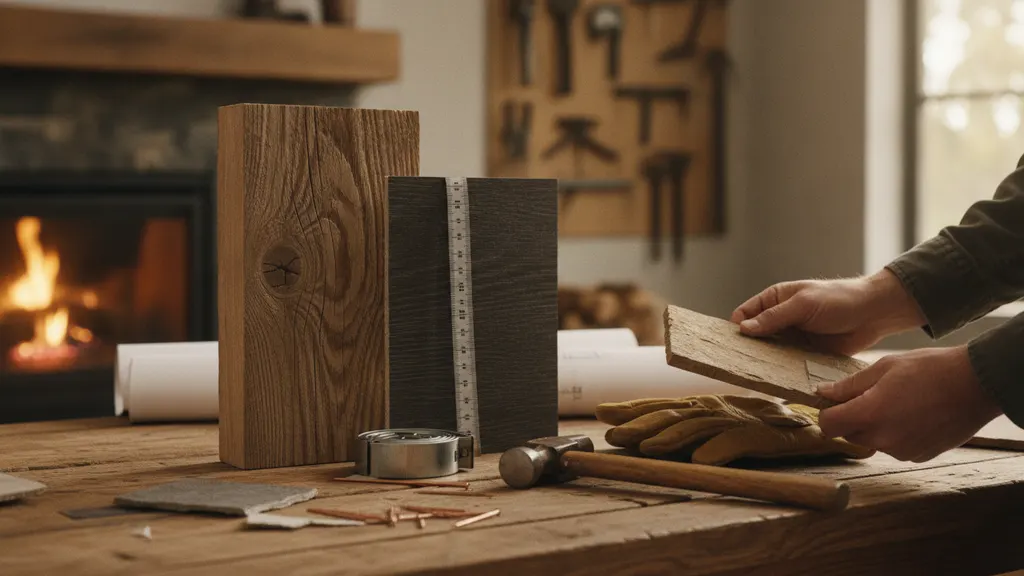
On a 1990s two-story colonial in coastal New Hampshire last spring, the warning sign was one soft spot beside the garage corner. When we pulled the panels, we found two sheets of delaminated OSB sheathing and a window head where the flashing had been reversed since original construction, directing water into the wall for thirty years. The repair added $3,400 to a $14,000 estimate. Sheathing scope can run from zero to 20% of the original bid, and there is no way to know until the old cladding comes off. That job changed how we sequence every exterior project now: we call an inspection hold before the house wrap goes on so the client and the lead-safe certifier can walk the exposed framing together, photograph every window head and door buck, and document sheathing condition before it gets covered back up.
Age matters too. Vinyl installed in the 1990s is often at end of life, especially south-facing walls that have absorbed two decades of UV. Painted wood on pre-1978 homes falls under the EPA Renovation, Repair and Painting Rule, which requires certified lead-safe practices when the crew disturbs painted surfaces. That paperwork and containment adds real cost, but skipping it is a federal violation and a health risk.
The EPA Renovation, Repair and Painting Rule, known as RRP, is a federal regulation administered by the U.S. Environmental Protection Agency under the Toxic Substances Control Act. Any contractor disturbing more than six square feet of interior painted surface or twenty square feet of exterior painted surface on a pre-1978 home must be certified under the rule. That means the firm must hold an active EPA lead-safe firm certification, every worker performing the disturbed-paint work must have completed an EPA-accredited renovator training course, and the job site must follow specific containment and waste disposal requirements. Before work begins, the contractor must give the homeowner the EPA pamphlet "Renovate Right." After the job is complete, a certified renovator must perform or supervise a post-renovation cleaning verification. Violations carry penalties of up to $37,500 per violation per day under federal enforcement, and state agencies can layer additional fines on top. Ask any contractor pricing your home siding replacement cost project to produce their RRP firm certification number before you sign a contract.
If your home also needs new windows, sequence the two together. Coordinating siding with our guide to window replacement cost in 2026 tightens the water management details at the head, jamb, and sill, and it saves one round of scaffolding.
What your home siding replacement cost quote covers: process and timeline
A whole-house siding replacement typically runs 7 to 14 working days on an average two-story home, weather permitting. Larger homes with complex trim, deep soffits, or three or more sides of shake siding can stretch to three or four weeks. Your home siding replacement cost quote should list the sequence line by line so nothing gets missed at the site.
The standard sequence looks like this: setup and protection of plantings and windows, careful tear-off with lead-safe controls if the house is pre-1978, inspection and repair of sheathing and framing, new house wrap or rain screen installation, window and door flashing corrections, then the new siding, trim, fascia, and paint or caulk work. A final walk-through, punch list, and dumpster haul-off close the job.
Sequencing matters for other trades. If you plan to add insulation or air seal at the same time, review the whole-home energy efficiency upgrades that pay for themselves so the crew knows to leave inspection openings before the sheathing goes back on.
Does new siding raise resale value, and how to choose a contractor
New siding raises resale value in two ways: buyer perception at first impression, and appraiser data pulled from recent sales. Recovery on home siding replacement cost starts with the Remodeling Cost vs. Value report, which has tracked fiber cement replacement recouping close to 88% of project cost on average, one of the strongest returns of any exterior project. Vinyl typically recoups a little less but often prices out lower up front, which can produce a similar dollar recovery.
Choosing the contractor is the other half of protecting your home siding replacement cost. Ask for three written bids on the same scope. Confirm each bidder is licensed in your state, carries active general liability and workers compensation, holds EPA lead-safe certification if your home predates 1978, and can produce three recent job references you can drive by. You can review completed exterior projects at the James & Co project portfolio before scheduling estimates, to calibrate the flashing detail and finish quality you should expect from any serious bidder.
Get the brand, product line, gauge or panel thickness, color, and warranty transfer terms in writing. A verbal quote of 'quality fiber cement' is not a specification. If you need help narrowing the color before signing off on a product, our exterior siding color and paint selection guide covers how undertone, sheen, and trim contrast read differently at full scale than on a chip. Also match your siding decision to the character of the house: if you are working on a period property, our notes on historic home renovation and preserving character flag the profiles and reveals that keep an older facade reading correctly.
Frequently asked questions
What is the average home siding replacement cost for a 2,000 square foot house in 2026?
For a typical 2,000 square foot single-family home, home siding replacement cost in 2026 lands roughly between $12,000 for economy vinyl and $32,000 for premium fiber cement, installed. Complex two-story houses, steep pitches, and hard-to-reach gables push the number higher because scaffolding, safety setups, and crew hours all rise. Add another 5 to 15% if your crew finds punky sheathing, failed flashing, or hidden moisture damage during tear-off. Cost figures reflect national midpoint pricing tables published by Remodeling magazine and can shift by region and season.
Is vinyl or fiber cement a better long-term value?
For most owner-occupied homes planning to stay put five years or more, fiber cement offers the better long-term value. It resists fire, insects, and rot, lasts 30 to 50 years, holds paint longer than wood, and drives the resale numbers noted in the Remodeling Cost vs. Value report. Vinyl still makes sense for tight budgets, rental portfolios, or homes where you plan to sell within a few years and simply need a clean, well-installed exterior. Match the material to how long you intend to own the house.
How long does a siding replacement job take?
Most siding replacement jobs on a typical two-story home take 7 to 14 working days from tear-off to punch list. A one-story ranch with straightforward trim can finish in 5 to 7 days. Large or ornate homes, or jobs with lead-safe requirements under the EPA Renovation, Repair and Painting Rule, can push into three or four weeks. Weather delays are common. Ask your contractor what the crew does during a rain-out day and how the site is buttoned up so exposed sheathing does not get wet.
Do I need a permit to replace my siding?
Most jurisdictions require a permit for full siding replacement because the work exposes sheathing, flashing, and sometimes structural framing that inspectors want to review. Some coastal, historic, or wildfire-prone areas layer extra rules on top: hurricane clip inspections, historic district design review, or ignition-resistant material requirements. Your contractor should pull the permit rather than push the paperwork to you. Building code officials linked through the National Association of Home Builders local chapters can confirm the current rules in your municipality before work begins.
Will new siding actually improve my home's energy efficiency?
New siding by itself is a modest energy upgrade, but the tear-off gives you a rare chance to add real value at the wall assembly level. If your crew installs continuous exterior insulation, a proper rain screen, and detailed air sealing at penetrations, you can meaningfully lower heat loss and reduce ice dam risk. The U.S. Department of Energy insulation resources explain how continuous insulation cuts thermal bridging through studs. Bundle the work if your siding is going anyway; retrofitting later costs several times more.
How do I vet a siding contractor and avoid bad work?
Start with three written bids on identical scope, then confirm each contractor is licensed in your state, carries general liability and workers compensation, and can produce three recent siding references you can drive by. If your home predates 1978, require proof of EPA lead-safe firm certification and worker training. Ask to see the manufacturer's install guide for the siding you chose and confirm the crew follows it, especially fastener spacing and clearance from grade. Detailed installation checklists on This Old House can help you review a bid line by line.
From our workshop
The work behind this
- Remodels & RenovationsTransforming lived-in homes with respect and artistry you can feel in every detail. We bring clarity to complexity, uncover what others may have covered up, and deliver spaces that feel completely renewed yet unmistakably solid.
- Custom Cabinets & KitchensHandcrafted in our Chattanooga workshop and installed by our own team, with options ranging from high-gloss finishes to solid oak, mahogany, and American walnut.


Thinking about a project of your own?
We start every job with a conversation. Tell us about your home and what you are imagining, and we will take it from there.
Book a Consultation