
Luxury vinyl plank flooring cost in 2026: durability & design
Luxury vinyl plank flooring cost in 2026 runs $2 to $7 per square foot for materials, plus installation. Compare wear layers, cores, and styles by room.

How much should you plan to spend on new floors this year? For homeowners weighing kitchen, bathroom, or basement work, the luxury vinyl plank flooring cost in 2026 usually lands between $4 and $12 per square foot installed, depending on core, wear layer, and site prep. Here is what actually drives the number, where LVP beats hardwood and tile, and where it does not.
What luxury vinyl plank flooring cost looks like in 2026
Answer first: most homeowners in 2026 pay between $4 and $12 per square foot installed for luxury vinyl plank, with the plank itself running $2 to $7 and labor adding $2 to $5, according to Houzz cost data. Budget lines stop near the low end; premium rigid-core SPC lines with printed wood grains push toward the top.
Two numbers you should separate before signing a contract are material price per square foot and installation labor. Material price scales with core type, thickness, and wear layer. Install labor scales with subfloor condition, room count, and how much furniture and old flooring the crew has to move. A quote that lumps everything into a single number often hides where the money is going, which is why the National Association of Home Builders recommends line-item bids on flooring work.
Regionally, expect labor in dense metros to sit $1 to $2 higher per square foot than rural counties. Stair nosings, transitions, and moldings are almost always billed as add-ons.
Wear layer and core construction that affect luxury vinyl plank flooring cost
Wear layer thickness and core type together carry a $2 to $3 per square foot swing in material price, often the full gap between a $2 budget plank and a $6 premium SPC product. The wear layer is a clear urethane cap bonded over the printed design layer; the core is the structural body that determines rigidity, sound performance, and subfloor tolerance.
Wear layer thickness is measured in mils (thousandths of an inch). A 6 mil wear layer suits a rental or a low-traffic guest bedroom. A 12 mil wear layer is the recommended residential minimum for kitchens, family rooms, and entryways per This Old House. A 20 mil or 28 mil wear layer is what commercial lobbies and short-term rentals should be running. Pushing wear layer up from 12 mil to 20 mil adds about $1 to $2 per square foot but easily doubles useful life under real furniture and shoes.
| Wear layer | Best fit | Typical life |
|---|---|---|
| 6 mil | Low-traffic bedrooms, rentals | 5 to 10 years |
| 12 mil | Residential kitchens, family rooms | 15 to 20 years |
| 20 mil | High-traffic homes, busy kitchens | 20 to 25 years |
| 28 mil | Commercial, short-term rentals | 25 to 30+ years |
Core construction breaks into two families. SPC (stone plastic composite) is dense, rigid, and quiet under foot. WPC (wood plastic composite) is slightly softer, warmer, and forgiving over minor subfloor imperfections. SPC dominates 2026 kitchen and basement installs because of superior dent resistance and water performance; WPC still shows up in bedrooms and dens where sound and comfort matter more. Beveled edges, embossed-in-register texture, and wider planks all push luxury vinyl plank flooring cost higher, since they require more expensive molds and printing plates.
I have made both of these specification errors on real jobs. On a 2022 basement project in Charlotte, the client pushed to skip the calcium chloride moisture test to hold the schedule, and I agreed; the slab telegraphed moisture through the floor that first winter and we replaced 620 square feet of SPC at our own cost. On a 2019 rental job in Rock Hill, the property owner chose a 6 mil budget plank to save $800 upfront, and visible traffic paths appeared in the kitchen and main hall within three years. Both calls pushed the luxury vinyl plank flooring cost of those renovations well above what proper spec work would have delivered. A $75 test and a direct wear layer conversation would have prevented both callbacks.
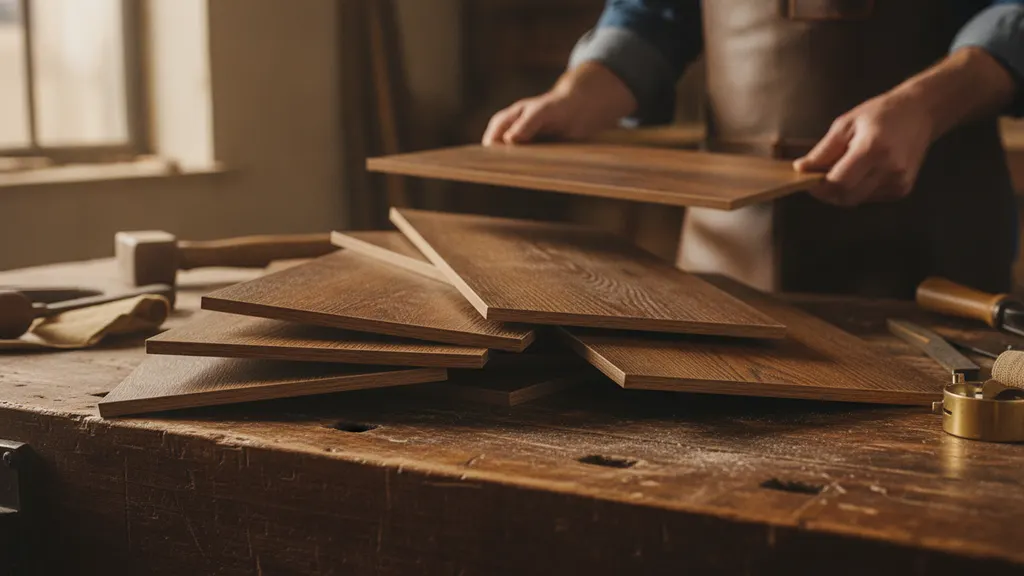
LVP vs hardwood, laminate, and tile: durability, water, and comfort
Direct answer: LVP is the most water-tolerant of the four common floor families, cheaper than hardwood or tile installed, and softer under foot than tile. It loses to solid hardwood on long-term refinish life and on resale in certain markets, and it loses to porcelain tile on true waterproofing and lifetime durability under heavy load.
Solid hardwood typically runs $8 to $15 per square foot installed and can be sanded and refinished multiple times over 50 years, according to Architectural Digest reporting on flooring lifecycles. LVP cannot be refinished; when the wear layer is gone, the plank is replaced. That is not a deal-breaker for most homeowners: modern SPC planks with a 20 mil wear layer routinely last 20 years in a residential setting, which is longer than most families keep the same kitchen design.
Laminate is LVP's closest competitor on price. Both use a printed decor layer over a rigid core. The gap is water: laminate cores swell when the seams get wet, which is why kitchens and basements have shifted to LVP as the default. Tile still wins in wet-mopped commercial kitchens and full baths with drains, but is colder, harder, and about twice the installed price. For a deeper look at wood as a comparison, see our hardwood floor installation cost guide for 2026.
Twenty-year total cost of ownership across four floor types
Over a 20-year horizon, the full luxury vinyl plank flooring cost picture shifts considerably from the day-one sticker. LVP at $6 per square foot installed comes in $2 below laminate, $8 below tile, and $11 below solid hardwood once replacements and maintenance are counted, making it the lowest total-cost floor for kitchens and basements.
A premium SPC floor with a 20 mil wear layer typically runs its full 20-year life with no replacement needed, so the total outlay across that window stays at the day-one installed price. Solid hardwood installed at $11 per square foot and refinished twice at $3 per square foot each time reaches $17 per square foot before any resale value is factored in; hardwood's long-run advantage arrives in year 25 and beyond, when the LVP owner must reinstall while the hardwood owner refinishes again for roughly $3. Laminate at $4 per square foot installed and replaced at year 12 runs about $8 across a 20-year window. Porcelain tile at $12 per square foot installed, resealed every five years at $0.50 per square foot, reaches roughly $14 over 20 years but carries no replacement cost in that window and holds up indefinitely under residential load. For kitchens and below-grade basements where moisture is a real variable, LVP wins on total cost by year 10 in most U.S. markets. For formal spaces in older homes where refinish cycles and resale optics carry weight, solid hardwood recovers its higher day-one cost over the long run. For a full breakdown of installed tile pricing in kitchens and baths, see our tile flooring installation cost guide.
Subfloor prep and removal add-ons before luxury vinyl plank flooring cost
Answer first: budget $1 to $4 per square foot on top of your luxury vinyl plank flooring cost for tear-out and subfloor prep, unless the existing floor is already flat, dry, and clean. Skipping this line item is the single most common way an LVP job goes wrong.
Old flooring removal alone runs $1 to $3 per square foot for glue-down vinyl or ceramic tile, and closer to $0.50 for floating laminate. Concrete slabs in basements often need a self-leveling underlayment pour, which Journal of Light Construction installation guidance puts at a flatness tolerance of 3/16 inch over 10 feet before rigid-core plank is laid. Wood subfloors need loose screws sunk, squeaks addressed, and any water-damaged sheathing replaced.
Moisture testing on slabs is cheap insurance. A calcium chloride or relative humidity probe test runs $50 to $150 and can catch a slab that will telegraph moisture through the underlayment. If you are pairing LVP with a broader basement project, see our basement finishing cost guide for how to sequence flooring after moisture control.
Best LVP styles and plank widths for kitchens, basements, and living areas
Answer first: 7 inch wide planks in a 48 to 60 inch length are the safe default for a 2026 open-plan main floor. Basements do well with the same width in an SPC core rated for concrete. Kitchens should always specify a full waterproof warranty and a 20 mil wear layer near the sink and range.
Plank width is a design decision that also affects the luxury vinyl plank flooring cost picture. Narrow 5 inch planks look traditional and match older homes; wide 9 inch planks look modern and reduce the number of seams. Long planks (60 inch) make small rooms look larger. Beveled edges add shadow lines that hide seams but also collect dust; a micro-bevel is a middle ground favored by Remodeling magazine for high-end installs.
Color choice matters for resale. Light oak and greige remain the two best-selling colors in the U.S. per National Kitchen and Bath Association 2025 trend data, followed by wire-brushed walnut. Very dark planks show every speck of dust; very light planks show every scuff. A mid-tone with visible grain hides both. If you are pairing floor work with a broader kitchen refresh, our kitchen remodel budget guide covers how flooring ties into cabinet and appliance sequencing. For wet rooms including bathrooms and laundry areas, our bathroom remodel cost guide covers which LVP specs hold up near water.
Frequently asked questions
Is luxury vinyl plank flooring cost really lower than hardwood in 2026?
Yes, in almost every scenario. Installed luxury vinyl plank flooring cost lands in the $4 to $12 per square foot range for 2026, per Houzz cost data, while solid hardwood installed sits at $8 to $15 and site-finished wide plank can push $20. The gap widens once you count subfloor prep on wood, which usually requires a plywood underlayment; LVP over a flat concrete slab needs no such addition. Where hardwood wins back some of the difference is resale value in older neighborhoods and refinish cycles that can push its life past 50 years. For most kitchen, basement, and rental projects, LVP is the lower-total-cost option over a 20-year horizon.
Which LVP wear layer thickness should I buy for a busy family kitchen?
A 20 mil wear layer is the right target for a family kitchen with dogs, kids, and daily meal prep. This is a step above the 12 mil residential minimum recommended by This Old House and adds only about $1 to $2 per square foot in material price. Twenty mil wear layers resist chair drag, dropped pans, and the small grit that gets tracked in from outside. Below 12 mil, expect visible traffic paths within 5 years in a busy kitchen. Above 20 mil is generally overkill in a residential setting and adds cost without meaningful benefit for most homeowners.
Does LVP need underlayment, or is attached pad enough?
Most 2026 rigid-core LVP ships with a pre-attached IXPE (irradiation cross-linked polyethylene) or cork pad, which handles minor subfloor irregularities and adds sound dampening. Adding a second separate pad is not recommended and will void warranty on most SPC lines. Where a separate underlayment does help is over concrete: a 6 mil vapor barrier is required on any below-grade slab, per Department of Energy moisture guidance for finished basements. On second floors above living space, an upgraded acoustic underlayment can drop impact sound transmission by 15 to 20 IIC (Impact Insulation Class) points and is worth the small labor addition.
Can I install luxury vinyl plank flooring cost effectively as a DIY project?
Yes, LVP is one of the more DIY-friendly floors on the market, and doing your own install cuts luxury vinyl plank flooring cost roughly in half. Floating click-lock systems require only a rubber mallet, tapping block, spacers, and a shear cutter or utility knife. The two failure modes for DIYers are inadequate subfloor prep and running the planks in the wrong direction relative to the longest sight line. Budget 8 to 12 hours per 200 square feet for a first-time installer. Warranty coverage often changes for DIY installs, so read the fine print from This Old House-featured brands before you start.
How long does an LVP floor actually last in a residential setting?
Manufacturer warranties on 2026 residential LVP typically run 15 to 30 years, with lifetime coverage on premium SPC lines that carry a 20 mil wear layer. Real-world life sits at the low end of the warranty for kitchens and mud rooms, and the high end for bedrooms and offices. Warranty coverage from a manufacturer is not a promise of aesthetic life; it covers structural defects only. The Remodeling Cost vs. Value report treats LVP as a 20-year improvement for resale calculations, which matches what most designers assume in practice. Buyers in the current resale market increasingly treat a well-maintained LVP floor as a positive selling point.
Is LVP safe? What about VOCs and PVC in the home?
Modern LVP sold by major U.S. retailers has been reformulated to meet FloorScore certification for indoor air emissions, and the Environmental Protection Agency lists FloorScore as an acceptable third-party certification for low-VOC flooring under the Formaldehyde Standards for Composite Wood Products program. Older LVP and off-brand imports may contain phthalate plasticizers and heavy metal stabilizers that raise concerns; buying from an established retailer with published FloorScore or CDPH (California Department of Public Health) Standard Method emissions testing avoids this. Ventilating a room for 48 to 72 hours after install clears the last of any residual off-gassing.
From our workshop
The work behind this
- Remodels & RenovationsTransforming lived-in homes with respect and artistry you can feel in every detail. We bring clarity to complexity, uncover what others may have covered up, and deliver spaces that feel completely renewed yet unmistakably solid.
- Custom Cabinets & KitchensHandcrafted in our Chattanooga workshop and installed by our own team, with options ranging from high-gloss finishes to solid oak, mahogany, and American walnut.


Thinking about a project of your own?
We start every job with a conversation. Tell us about your home and what you are imagining, and we will take it from there.
Book a Consultation